
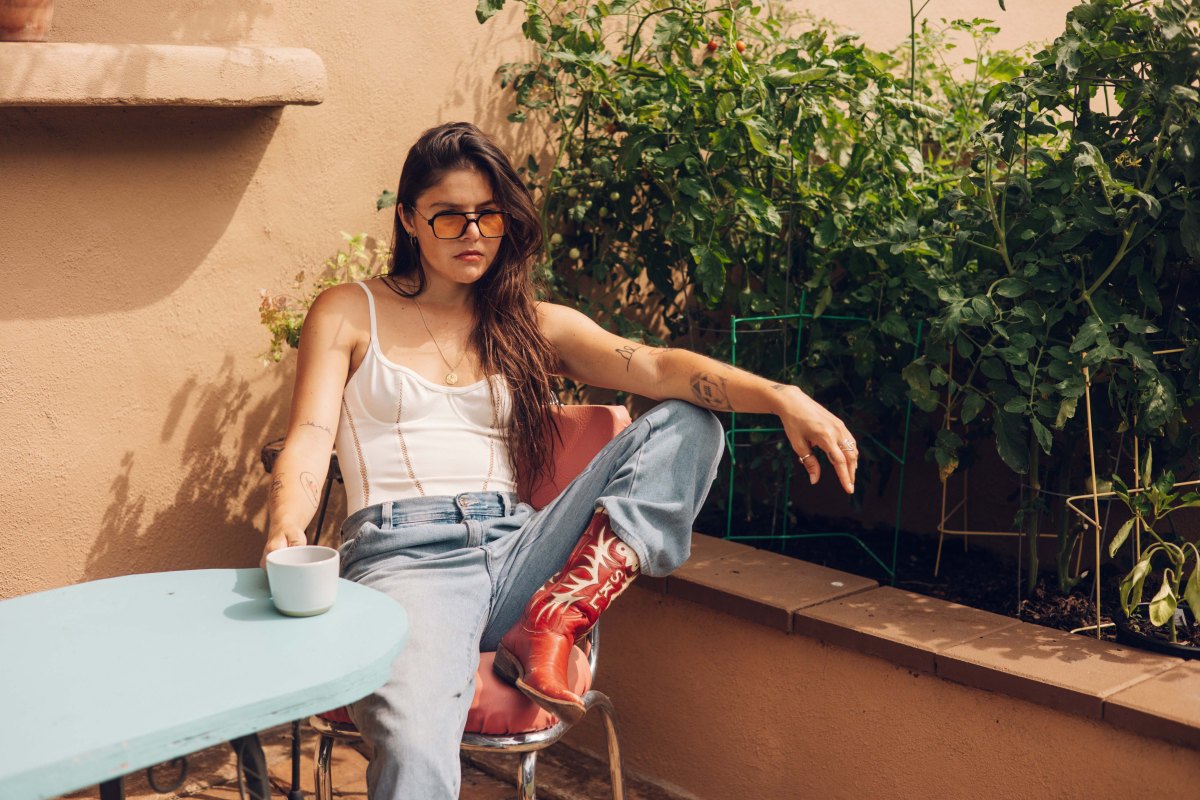
Austin-based singer-songwriter Sisi Berry sits at my kitchen table, coffee mug in hand, ready to entertain. Red cowboy boots and a white tank top on, she shares a sweet smile. Sisi emanates that effortless I-just-woke-up vibe that reminds me of female rockers from the 70’s, with the kind of messy hair and no bra je ne sais quoi that feels impossible to fake.
She rattles off anecdotal stories of her life, themes including heartbreak, the importance of family, and finding joy in the small moments. She names artists she loves at the moment, notes feelings of imposter syndrome that sometimes come up, and plans a summer full of finishing a new album and the promise it brings. It’s always positively refreshing and delightfully entertaining when I get to sit down with Sisi. I wanted to do a deep dive about her life, and ask her about where she came from, what moments impacted her the most, how she twists life lessons into lyrical expressions. In this interview, she dives into her new music, her writing process, and much more. Here’s my conversation with Austin’s next rising musician, Sisi.
Crowdsurfer: Tell us about who Sisi was growing up.
Sisi: I am one of five brothers and sisters. And I helped my mom raise them. My identity, more than anything, has always been that I’m my mother’s daughter, and I helped raise the kids. I didn’t play music. Music was more of like the loud background noise. It was in our house because we’re Latino. So it’s just always in the background. Not because any of us played it, per se. I sang in church. What I did more than anything was write with my sister, because my sister’s a poet. She’s six years younger than me, but we just wrote all the time. So more than a singer, I felt like a writer. And then I started singing around high school.
The first song I ever sang was the National Anthem. Because I wasn’t tall enough to get put on the court for the volleyball games. But I would sing the National Anthem. Which is why when I sang in the Austin FC and everyone said, you have to learn the song, I was like, no, I know that song better than I know any song.

Sisi growing up was just a little kid. Me and my siblings played outside all the time and I raised the kids and babysat everybody in the neighborhood, worked as a lifeguard. I was just a little worker. Forever. That’s literally what I feel like I’ve always been.
Crowdsurfer: When did you first find interest in music in the sense that it became something you made and created?
Sisi: You know when you write something good, and you want to share it, and then your sister or your sibling thinks it’s good, and then they’re connecting to it, and then you’re like, this is cool, I think I’m doing the thing that people do. And it started kind of locking into place.
I felt in college, when there was very much a fork in the road between pursuing medicine and playing music, that it felt like a choice, that it couldn’t be a hobby. Music was so backseat. It was like this thing that I did, like the way people like to go to the gym. I was like, I play music. I played in a band. And the more I played the more I felt like it was a tangible option. I didn’t grow up in the industry or whatever. So you don’t see it as an option. It’s just stuff that other people do. It’s worlds away from you. And the more I did something, whether win Battle of the Bands, or have a band in general, go to a studio for the first time, because that was the award for winning Battle of the Bands in college, or play a show and people being stoked, because they’re like, aren’t you the girl that played last night?

And that feeling alone, being like, that your songs were memorable, that someone’s night was about something that you did, that you existed at all. So you almost felt like, you were more alive and more connected, in a new world, and that was a big click for me, I guess. I remember calling my mom. I was sitting on the top of my roof and crying because I felt really bad to not pursue medicine.
I’d gotten the opportunity to have a full ride for pre med and I was essentially walking away from it. And to go, you know, play my little guitar, which my head space really did have a different – not a disrespect for it – but like a vanity almost like playing and writing. It felt like a selfish way to spend time or something. Like I could not wrap my head around it ‘cause it was serving nobody but me. So music felt selfish until it felt like it was connecting to people and serving some other, some other new thing, an emotion for people. Or myself, actually, because I’d never really written for people. It was just helping me process life and I needed it.
Crowdsurfer: What is your songwriting process like?
Sisi: Everything I’ve ever written is anecdotal. Everything I’ve ever written is like a, Hi, nice to meet you, my name is Sisi, this is all real. I even have a song that says, “And if someone asks you, What happened? I hope you send them my Spotify link.” So if you need to know anything, it’s all there. Between family stuff, and love stuff, and work stuff, and life stuff, faith stuff, all the things. Just being anecdotal.
Crowdsurfer: How do you feel like your family and your heritage has influenced your music?
Sisi: My family has impacted everything. It’s the pursuit and my biggest why behind it. Like, the reason that it doesn’t feel selfish is because my dream is to retire my mom with my music. To take care of my family and that be the the reason we’re all okay. Which is probably a hero complex that I have to work through in therapy. But, I just want everyone to be okay. And I want them to have every option in their life.

I think that’s everybody’s dream. And I’ll speak for most Latino kids, that like, our dream is to take care of our mom. Like, take care of our family. That’s a very ingrained part of our culture in general. My mom is everything, and has done everything and sacrificed her whole life for us. So that’s the big impact.
Being my mother’s daughter also means that I was raised very Venezuelan. We’re a military family, and my dad was American. But we were raised in the most Latino household ever. My family is very, very big. And whether we were in Venezuela, or Germany, or New Orleans, or Washington, or El Paso, or San Antonio, it was little Venezuela. If you asked, “Where are you from?” After moving so much, I was like, I’m from my mom’s house. This is where I’m from. I’m a military kid with a Venezuelan family. So the impact of being Latina is, is more, if anything, my personality and like gusto and the matriarchal feeling of being a Latino woman raised by my mom. I feel a lot of like power, if that makes sense. I feel a lot of ownership over self. It’s less to do with do I sing in a certain genre or anything. It’s more of like, I write different feelings in different languages, certainly. But the influence of being a Latina and a Venezuelan daughter is more of like my core’s confidence or something.
The way that I perform is definitely influenced by how I love to dance. And I love to dance because all we do is salsa, merengue.
That’s all we do at my house. That was the influence of music. We didn’t see it like, oh, let’s be singers. It was like, blast salsa, and then we’re going to make arepas.
Crowdusrfer: Let’s talk about your live performances. You performed at Austin City Limits music festival last year. Tell us about that. What does it feels like to be on stage?
Sisi: Performing is my favorite thing in the entire world. When I perform, I feel so comfortable and so myself. A stage like ACL also made me feel like, like you get a sugar crash. You’re like, Oh my God, if it’s not this, then I don’t want it, and you get really hungry and you get really sad at the same time.
But when you are performing it’s the fucking best feeling and it’s also really really humbling because you’re watching people sing songs – like people are singing my lyrics. What?! But it also makes you be like, I’m gonna give you the best show I can like if you came to see me then I want to I want to live up to it.
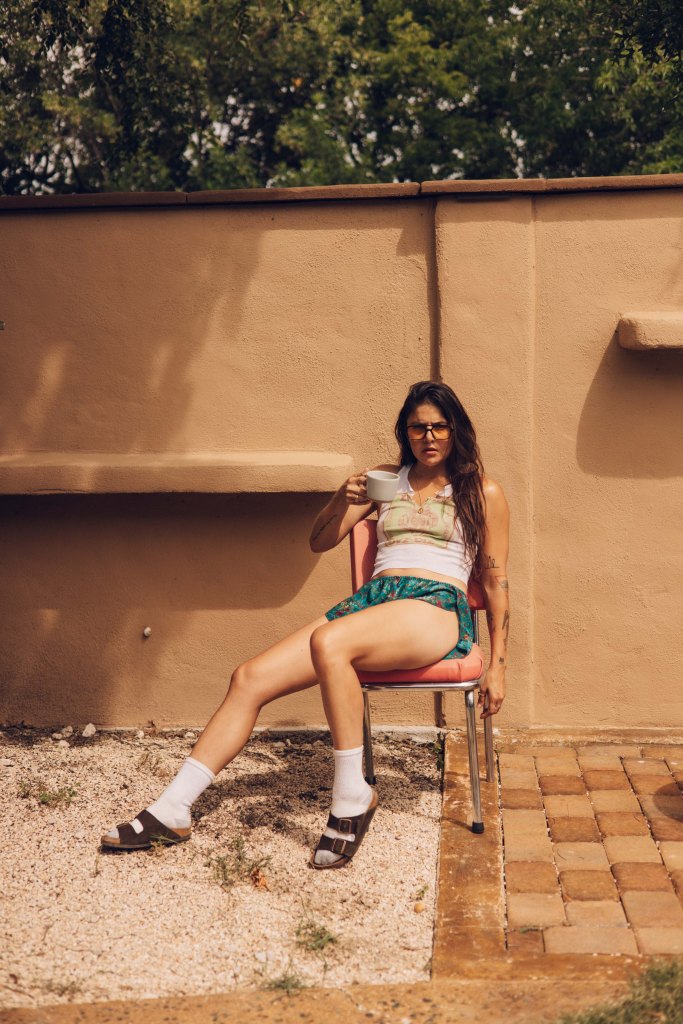
A big stage like Tito’s stage? So fun. That’s the furthest I’ve been from my bandmates, they were so far away from me. So I was like, where are you? But it also had so much playground and it also tapped into a new way of performing. Like, how can I move around the stage? Who, what areas can I look at? You know, what different version of connectivity can I tap into? And what else do you want from the performance? What, who else can fit on stage? What could be cool? Dancers, stage elements, different outfits, etc.
Any working musician in Austin, I think, that has been here as long as I have, knows the shows we’ve played at 1am for four people, so that’s the first thing I thought of when I was at the Tito’s stage and I saw at soundcheck and you’re like if nobody’s here that’s gonna suck and then it filled and then there were people and then I cried twice because I’m a child and my mom’s there.
Crowdsurfer: Let’s talk about Sisi. Is Sisi different than you?
Sisi: Sisi (pronounced Cee-cee) is my name and I go by Sisi because my name is Ana Cecilia and Sisi is what I’ve been called in my family forever. Sisi sometimes gets pronounced Sissy and it gives me a heart attack.
So all the merch was created to help with that sentiment: Sisi, yes yes, ya ya, oui oui.

Is Sisi me? I like to think there’s a lot of connective tissue to all of it. I don’t feel like I compartmentalize too many parts. All my music is really vulnerable, I say a lot of the things that are actually going on in my life. But, I don’t know, I catch myself being very myself, almost to a fault, uh, during shows. And I just feel like friends with everybody. When I’m playing I feel like everyone’s my friend. So I think on stage I just feel like, we’re all in our own little, you know, friend group and we’re all there that night and it’s like, what’s up guys? What are we drinking? I’m gonna sing y’all this one song about that one asshole.
But me performing is the most honest part of me. The irony is that me performing feels like the least performative version of myself. And perhaps the rest of my life has nuances of like different composures that are more performative to just get through the day. On stage, that’s as clean as it gets. That is all me.
Crowdusurfer: Tell us about your latest release, Sugar.
Sisi: I’ve written so many sad songs that I was also very excited to finally write something that didn’t feel like a sad song. It’s a song on me thinking about the way the world is moving. And the rhythms of how people fall in love or not fall in love, or how they try. And I was sitting at one of my favorite spots called Rosie’s that everybody should go to, it’s in my neighborhood. And in last year’s sad girl summer, I would go on long walks with my dog, walk to Rosie’s, sit in a corner, and order enormous amounts of champagne and watch the world be the world, right? And this little bistro has these little cute kind of European two tops. So a lot of people go on dates there. It’s really cute and romantic and flirty and I’d just sit in a corner with my dog and watch people. And I would eavesdrop obviously. I would hear people doing the thing where you meet people and the way that people would intro themselves. It’s all very bizarre. Like when you’re on the outside, especially with your nervous system being in a heartbreak era, watching people reattempt it, I’m like, that’s, what? And you’re hearing them say things, and you’re like, mmm, that’s not gonna work. And then it does work, and I’m like, oh, she liked that one. What? Like, what are you talking about? And it was escapism, certainly, to listen to other people’s lives. But it also was impressive. People showing, giving their best foot forward. It’s almost like they gave the dessert before they gave the entree. Like, you gotta give all this sugar. And sugarcoating kind of everything about yourself and that maybe if it’s just sweet enough that they’ll see you again and you’ll go in for like an appetizer or an entree.
And my head was like, oh, they’re doing it, there’s no slow roll here on how you meet someone. This is: give them as much of the candy and then maybe they’ll be interested in something more like fully getting to know the monotonies of ourselves. I was just really impressed by some of the lines because they were all the same.
And I was like, no way. Do they have flashcards? Like, is there a newsletter I’m not getting? They said something along the lines of like, “Hey, this was awesome. I’ve got an early morning, but this was incredible. I hope to see you again.” But they’re definitely not gonna see each other again. Or they’re like, “Oh my God, we have so much in common. I love you. Let’s go to Mexico tomorrow.” It’s either all in, or all out. And it was impressive and it was entertaining and it was a world that I don’t want to be part of. But it was sweet to watch. It was just as sweet to watch as it was to do. Like the sweetness that they were giving. And so that’s what Sugar is about. Sugar is the watching them be sweet. So sweet that you’re like, I don’t even know if that’s real.

Crowdsurfer: How have you been writing your new album and what topics are you covering on the new album?
Sisi: I am doing this record with Chris Boosahda. People know him for being a part of Shakey Graves, producing Wild Child. He’s an incredible producer. I’m so excited to work with him. A lot of it’s been about what’s going on, what have I written in the past, what do I want to include on the record that feels cohesive and it feels like the one good sourdough bread all together rising at the same time rather than like a basket of random shit.
The topics range, it’s kind of like a journey. You can literally listen to it in order and be like, oh, she was not okay. Some, kind of okay. All right here. Some of my songs are about how I do recognize love to be very real because of the love of my parents and the sweet family life. So it’s the acknowledgement of that love, love is so versatile and the ways that we should need it or want it don’t have to be. You don’t lose love. You lose the people that give it but not love. Love always belongs to you. So you never have to go find it. You walk away with yourself in every interaction, and you wake up and you go to sleep with your own head and your own heart. So you’re not without it ever. It’s just a gift you get to give and receive in different ways.
I wrote a song recently called Rhythm and Blues that I’m so stoked on because it’s about the accountability also of recognizing that if you stayed in something that you made a choice. Like I made a choice to stay, you know? And why, and is the self analysis of that. Who was that girl? And Rhythm and Blues is about being like, well, I gave you rhythm and you gave me the blues and, and choosing to be without the sadness is choosing or like deciding, acknowledging that we’re definitely not together. And when it becomes your identity to be the sad girl.

There’s not a strategy necessarily on what I’m writing and how I’m writing. It’s more that I’m just letting the way that my anecdotal self wants to write, because I write fast like that, and I write things I like when it’s like that. For future music, I’m not sure. I’d like to try and explore other ways of writing, but this one is, as I’m feeling it, what I’m feeling, and how I want to bop to it, which is different.
The beginning, the first parts of the record, I was putting out music that’s I don’t want to bop, I was just kind of throwing up. You know what I mean? And these, especially Rhythm and Blues, is parts of music that I love, like, R& B, and soul music, and vibing, and kind of grooving and dancing. And R&B has that, and I’m so excited to put it out.
Crowdusrfer: Tell us about Who’s Gonna Worry About Me.
Sisi: Who’s Gonna Worry About Me is the first song I wrote where I felt the listener’s response. As I would release pieces of the lyrics, people would write me and say, “I really needed this song. This song means a lot to me.” And I was like, what? Like, are you, are you lying? Like you’re actually listening to the song?
And the opportunity to do a music video was also probably the most transparency of actual pain I felt because we got to lean into asking how do you give the impression of those lyrics? And that was the first time that I got to do a project with a proper team. It was produced by Gaby DeLeon, and filmed by Gaby Deimeke. And there was an actor, Jeremy Vandermause, and that was new to me too. And that was a huge, um, momentum and morale boost for me.
Crowdsurfer: What are you looking forward to the rest of the year and onward?
Sisi: I’m not like an already big thing, and I’m not starting from scratch, but there’s this runway, and there’s a pot of water coming to a boil and you’re just like, it’s almost boiling, like it could be a thing. We could really cook some dope pasta, but like it’s not there yet.
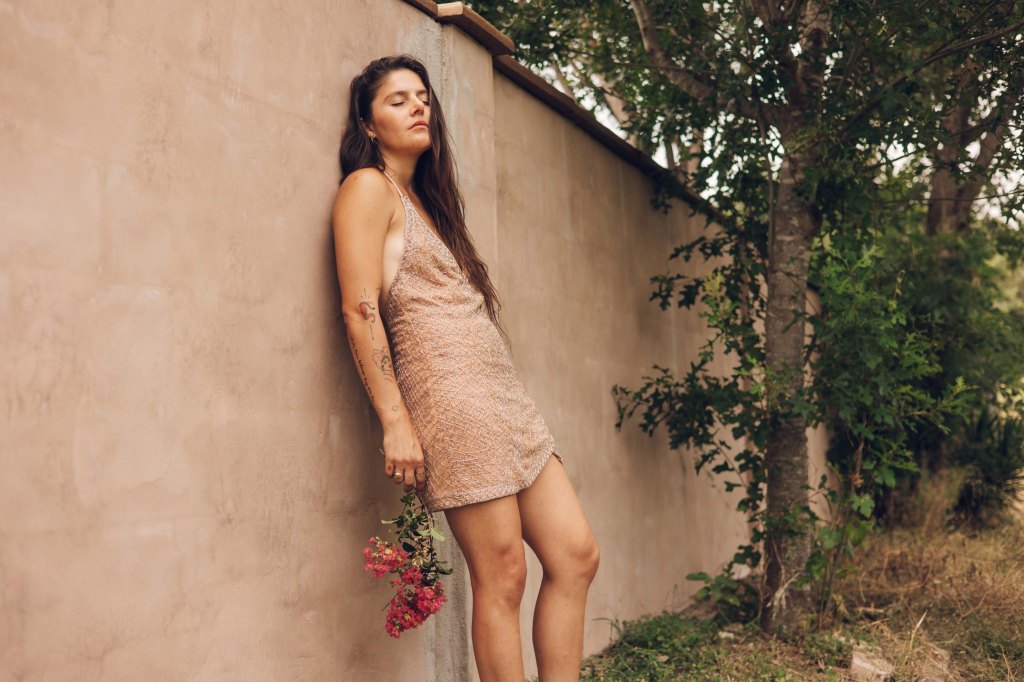
And so I think the goal of putting a team together to release this record in this way feels like a really real science project of being like, this is what actually works for an artist in my scenario. And being from Austin, and wanting to represent Austin, I feel really proud to have been a working musician in this city for this long, and I feel really loved and supported here. So to try and honor also this city and the space that’s nurtured me by doing the damn thing. If they’ve given me platforms to try and support me, then I gotta go and do this shit, you know. I’m looking forward to seeing what that actual momentum for the record means from an indie perspective.
Here’s what I want to see: What does breath look like for this record? And who do I become in trying to give it breath? Cause it’ll be someone I haven’t been yet, cause I haven’t done it yet. So, who the heck am I gonna be?
You can see more of Sisi on her Instagram, TikTok, and Spotify page. Photos and interview by Gaby Deimeke. Special thanks to Gaby DeLeon.

 crowdsurfermag.com