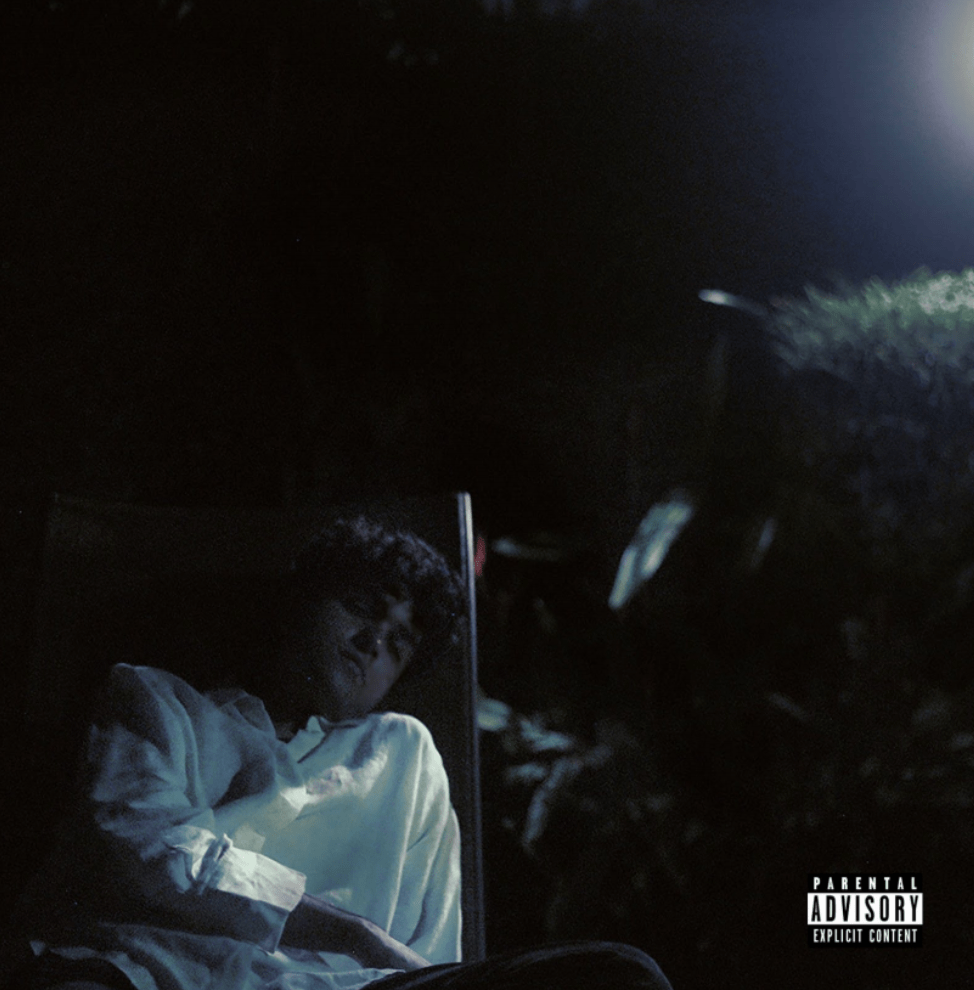
Middle Part is an artist bringing us synth-laden indie pop music that speaks to the soul. Unafraid to use music as therapy, Middle Part writes deeply personal stories in his songs. “& Cry” doesn’t stray from that, and gives us permission to shed tears when things are overwhelming.
“& Cry” is an incredibly moving and cinematic piece. The chorus is simple in lyrics – “Go ahead & cry” – but the emotional impact is heavy. “I really wanna hold you / I’m just not all there,” Middle Part softly sings, speaking volumes in those few words about not being mentally able to take on the things that you want. Preceding those lines is “I hate when I’m like this,” and when you hear it you might start crying yourself into a cathartic release. Falling just under three minutes in length, I suggest keeping the song on repeat as one listen isn’t enough.
Middle Part will be releasing an EP in the near future called I Wish I Was Alive, so keep your eyes out for that and stream “& Cry” in the meantime! We certainly are ready to dive headfirst into his intense music and hope you are, too.
Crowdsurfer: Thank you so much for being willing to do the interview. For our readers that might not know, walk us through how you got started with music.
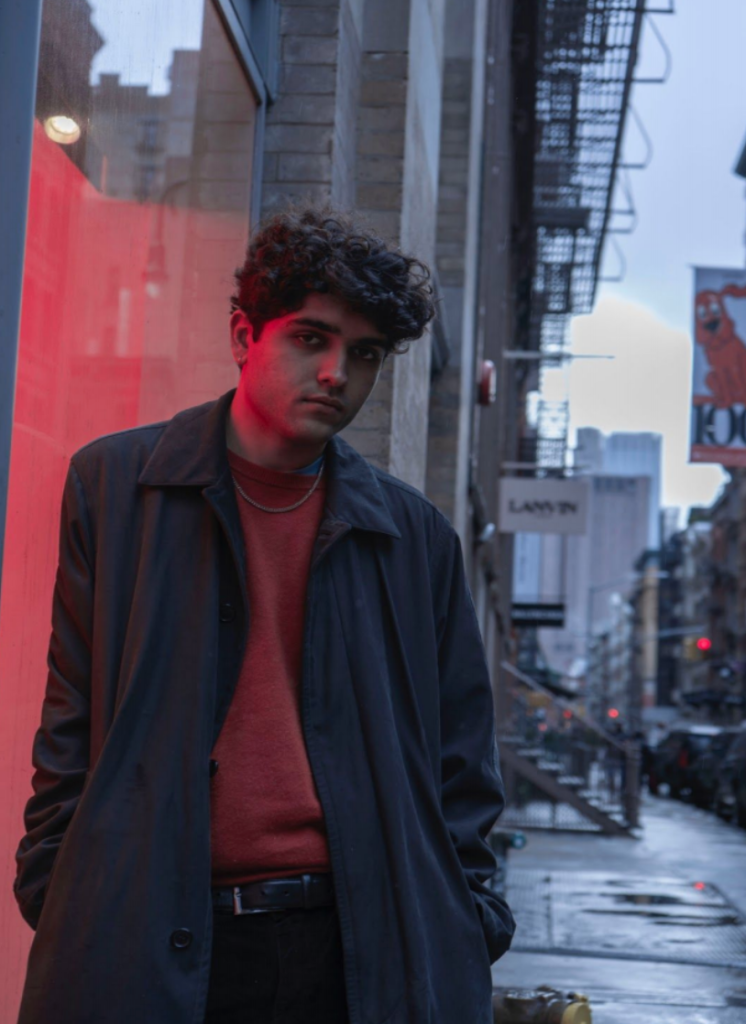
Jackson Breit: I grew up playing trumpet in my school jazz band. And then a few months after that or a year after that, I started like a reggae rock band in high school. And then towards the end of high school, I started a rap group called Bruno Jackson and I started producing like Hip-Hop production. And then at the very end of college, I put out like a song called Sunny Side, which is like a feel good song. And it kind of blew up in a way. So I moved out to L.A. to do music full time.
CS: You produce your music as well, don’t you?
JB: I do. I produce a majority of my stuff, I’d say. I work with other producers too. But yeah, a lot of this stuff I produced myself. I’m pretty meticulous with that kind of stuff. It’s a double edged sword, because you could spend hours on one little snare drum noise. If I’m not producing it, then I’m just worried about the vocals and stuff like that. And maybe guitar. But when you’re producing it, you can really go deep down the rabbit hole.
CS: How do you find a balance with wanting songs to be perfect production-wise but also know when to finish the song?
JB: It’s hard sometimes, you know. Sometimes you get stuck, you get caught in limbo for so long that you lose interest in the song. So one of the things that you have to realize as a musician is when to cut it off. When the song is done, and when the squeeze is not worth the juice.
CS: What’s your favorite genre or style to create?
JB: What I really enjoy doing is kind of blues-y soul and hip hop. I feel like now I’m going closer to like my natural state, whereas a lot of the other stuff, it’s me, you know, I’m attempting to tap into some genre that I feel like people would like. And now I’m doing more of what what I really want to hear myself.
CS: What’s your songwriting process like?
JB: When I’m writing songs, I start with the music and then go to the melody and the lyrics. Usually for me, I try to reflect the music. So whatever that brings out of me, that’s going to come out on the track as like somewhat authentic because I’m I’m trying to match the vibe of the song. So it’s mostly what I’m feeling. I wouldn’t say I set out to be like, oh, I’m gonna make a super sexy swaggy track today. But if I get in that little zone and freestyle, I might come up with something that’s kind of sexy. But if it’s like a sad acoustic thing, then I’ll try to reflect that in the melody and in lyrics.
CS: Walk us through how you go about creating a song.
JB: It almost always starts with a guitar. And then it’s just trial and error. Trial and error as far as like the rhythm, tempo, all that stuff. And then maybe I’ll put down a little loop or something and see if some melodies pop and then that’s when the whole process starts. Usually I’ll give it a couple hours, I’ll go hard on that, on whatever song I’m doing for a couple hours and then take a little breather and look at it and ask, “Is it like is this worth my time to continue on or is this kind of wack?” Because for every song I put out, there is a hundred wack ass songs that don’t make it.
But on the contrary, if you get a little nugget that you like, and it’s like a baby seed that you’re like whoa like there is something serious here. And sometimes it’s very little. It’s just like the beat or something. It’s a melody. And then you’re you’re really energized. Then you can be like, let’s hunker down with this. So that’s the greatest feeling I feel you can have as a musician.
CS: What’s is like making songs with other musicians and producers?
I have a buddy who comes and plays bass, who is just an insane bass player, and he plays keys, too. He’s been invaluable because he just knows chords that my fingers are just not capable of doing. And then when you hear certain chords and progressions that I wouldn’t find naturally, it opens up a new door for me melodically. It’s really great to work with like talented musicians like that. And it opens doors. And it’s the same when people work with songwriters.
CS: Your 679 cover has 16.6 million Spotify listens at the moment. What’s it like to have that kind of success with a song?
JB: I was very hesitant to do covers and I wanted to write the music. And then somebody was like, listen, like, you need to do covers to get exposure. He was advising me at that time. And so I did 679. I sent it to him and he was like, no, it’s not ready to put out. That’s not the one. But I was like, well I just did it, I’m going to put it out anyway. And I don’t even know how it happened. It kind of took off a little bit on SoundCloud. And then we went on Spotify. I think it really hit the college scene. And then it hit the gaming scene like video gamers use it. And so I don’t know what happened, but it happened and the song is kind of well known now. It doesn’t feel as good because it is a cover, but I’m very happy and I’m thankful that it did what it did because it led a lot of people to the rest of my catalog.
CS: Talk a little bit about choosing to be an independent artist versus being signed to a label.
JB: When you’re independent, it’s great because you have full freedom and control over what you want to deal with everything. But you also don’t get the same amount of exposure and the same amount of promotion. So it’s good and bad, but I would say mainly it’s good being independent. But, you know, it would be nice to have a little bit more push on certain releases.
CS: Would you consider signing with a record label at some point in the future?
JB: Yeah, absolutely.
CS: Tell us about what projects you’re working on now. And hopefully after all the Corona craziness ends, what your year looks like.
I’m actually putting out a cover, and it’s my first cover since all those covers awhile ago. It comes out on Friday. My sister got married this last year, and she asked me to sing this song by the Pussycat Dolls Stick With You. I had never heard it, but I was like oh, this is a lowkey banger. So I recorded my own version to sing at the first dance. So I did the part for her wedding, and then I did a different version that I just fell in love with and was like, this is one of my favorite things I’ve ever done, if not my favorite thing. So I finished it and it’s finally coming out on Friday. But it’s a different vibe. It’s a very slow kind of emotional song. But I really like it.
I also just did a spoken word thing that’s about the current Corona crisis. It kind of just came to me. I was just thinking about, you know, the whole situation. And and I just wrote this in a few minutes. I showed it to my brother and he really likes it. I think we’re gonna try to shoot something and put it out on YouTube.
I’m going to continue to put out stuff throughout the next few weeks. More singles after that, actually. We’re gonna give them music because honestly, everybody is just sitting at home like, what do you do?
CS: Amazing! We’re excited to hear it. A fan on Twitter wants to know about your short film that you put out on YouTube. Tell us about why you made that project.
JB: That was one of those things where I had all these songs that never became full songs. But I liked them and they were like a verse or chorus, but for some reason or another, just never became full songs. I was talking with my brother, who is a film director. We thought we could maybe make a short story with these songs. So we planned out a plot for it. And I think it was nine songs and we went to Joshua Tree and we shot this whole thing. It’s weird. It’s dark. It’s definitely on the darker side. And people know me as like a happy guy, or the feel good guy, so I wanted to do a wild plot twist. So it’s nice to put that out in the world, you know, and let people see that dark side.
I feel like it’s a necessity to show those sides. Because I’d say a majority of my stuff is kind of light hearted for the most part and it’s nice to tap into the real shit. And then all these songs I’m putting out over the next few weeks in Corona’s season are they’re all kind of more on the emotional side.
CS: What kind of advice would you give to people that are maybe like making music in their bedroom right now or just just kind of starting out?
JB: You can you can sound fully professional on your own. You don’t need outside help. So go on YouTube, do whatever it takes. You can find a way to have a fully professional sound. And it is the most intoxicating thing when you get a finished project. I thought this could go anywhere. And I just did it in my living room, my closet, my garage. It got me extremely motivated. When you get the first taste to see it come out and you’re like, oh, this is sick. You can make anything sound as good as us like a studio or a label project. So that’s I think that’s very motivating.
CS: Anything else you want to add that you want to tell people about?
JB: I’m just gonna keep putting out singles and I’m also thinking about a live concert online.
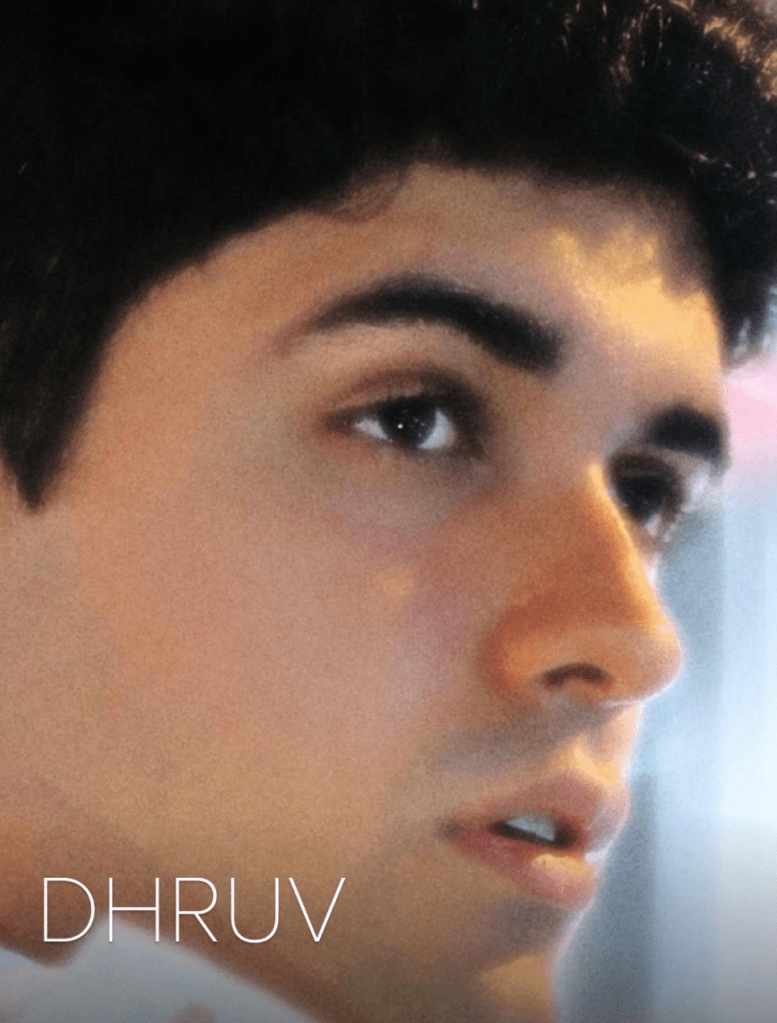
Trading lectures and lessons for studio recording sessions, singer/songwriter Dhruv elaborates on the life of a college student– who happens to have a single with 500k streams, and all without any industry help. If you know anything about music, you know that it is extremely hard to promote an artist without even a little help, but Dhruv’s talent proves otherwise. His first single, ‘‘double take’’ was released in May 2019 and has since amassed over 500,000 streams alone. As a student, he plans on making his way into the music industry, one way or the other.
Now, we are not here to talk about how well he seems to be doing in school. We want to know if his music is any good! I was lucky enough to get the chance to hear his unreleased track ‘‘Moonlight’’ which is set to be released today, February 21st. The song depicts the naivety and simplicity of a relationship, and it is so well-written musically and lyrically that you’ll be falling in love with it too.
Growing up queer in Singapore, dhruv spoke about the difficulties navigating his identity in a place that was not nearly as progressive. ‘‘Lyrically, it is about pining for something that seems as if it only existed in movies. I wanted to write something intoxicating and beautiful like the love we see on the big screen, something I never got to experience in real-life, I only learnt about love as I saw it in pop-culture/movies/books,etc.’’ There are lines in the song that give examples, ‘‘poetry and hand-picked flowers, say you’ll meet me at the altar’’ and ‘‘true love, kinda hoped it would feel like a rom-com’’ that directly represents the movie kind of love that I searched for.
Dhruv sends his love to his fans, and apologizes for the long wait. He made sure to only release what he felt was ready to be heard. Be on the lookout for more of Dhruv and stream Moonlight on all platforms today!
I spent my last two nights with Dermot Kennedy and let me tell you.. I feel as if I’ve gone through 5 years of therapy in a matter of 48 hours. I’ve never come across a musician quite as talented or lyrically creative. The depth of the lyrics combined with his passion set him worlds apart from other artists. His shows are the type you get lost in. Last night, I heard (and felt) every lyric like it was the first time. I’ve seen Dermot several times now, but regardless of seeing the same songs performed multiple times, each show has been its own, unique, experience. The songs have the power to shape-shift into whatever I need them to be, and I think that’s the most beautiful thing about them. I was standing in a sold out venue; shoulder to shoulder with countless strangers and I couldn’t stop wondering how everyone around me was interpreting the words.
For Island Fires and Family is a particularly emotional song for me. It’s a song he sings solo, which means there are lulls in the music and moments of silence. Last night (and the night before), the silence was filled with sniffles — mine and all of the strangers standing around me. Everyone took that song and applied it to their own lives. How beautiful it must be to create something that touches thousands of people so deeply and intimately. It’s not lost on me how special that is and how lucky I am to have experienced it.
Every time I see Dermot perform, I seem to be dealing with some emotionally heavy things. I walked out of the venue last night feeling 1,000 pounds lighter than I did walking in. I wish I could tell him thank you for that. To all my friends (iykyk): if @dermotkennedy is coming to your city, I urge you to buy a ticket asap. Trust me on this one.
The last lyric of For Island Fires and Family is, “even though this life, this love, is brief, I’ve got some people who carry me.” We’ve all got those people who help us get through the day-to-day. Hug your friends. Hug your family. Tell the people who carry you that you appreciate them a little bit more often. 🖤
We’re so excited to bring you a behind the scenes look at NYC artist and performer Cellus Hamilton. He moved to New York from Atlanta to pursue his music career, and he spends a few hours every week performing in Subway cars to commuters and tourists. We followed Cellus during one of his shifts and talked to him about the process, why he started rapping on the subway, and where he’s headed in the future.